
How a job goes
What to expect
Squeaky Hoods cleans commercial kitchen exhaust systems out of Melbourne, FL, for kitchens across Brevard County, Florida. If you've never booked a hood clean before, this page walks through what the job actually looks like.
From the first message to the last pass
We come look at the system
Nothing here gets priced off a phone call. Tell us where the kitchen is and roughly what is over the line, and we’ll come out and look at it with you. How many hoods there are, how the duct runs, how long since the last clean and whether the fan is reachable are what decide the size of a job — and none of that shows up in a description.
Walk the line with us and point out what has to be worked around: a gas shut-off, a make-up air unit, a ceiling tile that will not take a ladder, a roof hatch that needs a key. Say which of it you would rather we did not touch. We work around what you tell us.
We quote the real job
Once we’ve seen it, you get a price for the work in front of us. Sending us a quote request costs nothing, and a price we come back with doesn’t commit you to anything.
There’s no list price for this trade, and we don’t pretend otherwise. A clean scales with how much system there is and how much grease is in it; a line cleaned quarterly and one nobody has opened in three years are two different jobs. So every quote is written to one kitchen.
What we bring
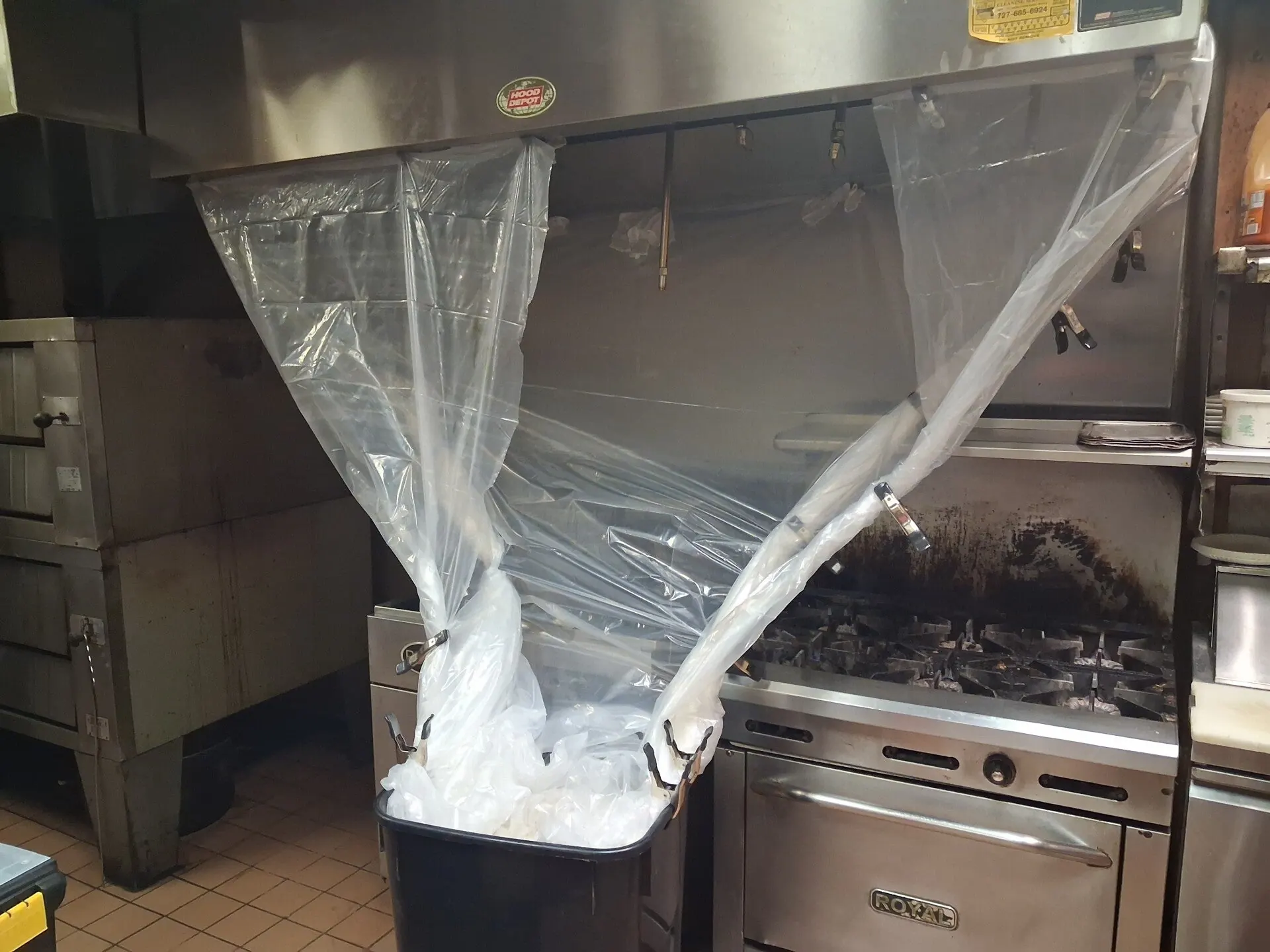
A 4000 PSI washer running at up to 250 degrees, which is what moves baked-on grease that a brush will not. Sheeting and a collection bin to keep the washwater off your equipment. A camera, because the inside of a duct is the part nobody can see from the floor.
We aren’t a fire suppression contractor and we don’t touch the system over your line — that is a separate trade and a separate visit. If yours looks like it needs attention we will say so, and leave it alone.
On the day
We need a cold line, somewhere to run a hose, and roof access if the fan is part of the job. Tell us up front if any of that is awkward, so we plan for it instead of finding out on the night.
Whether you’re there while the work happens is worth settling when we quote the job — say which you’d rather do and we’ll plan the night around it. Either way, agreeing up front what the job covers is what makes the rest of it straightforward.
What the kitchen looks like afterwards
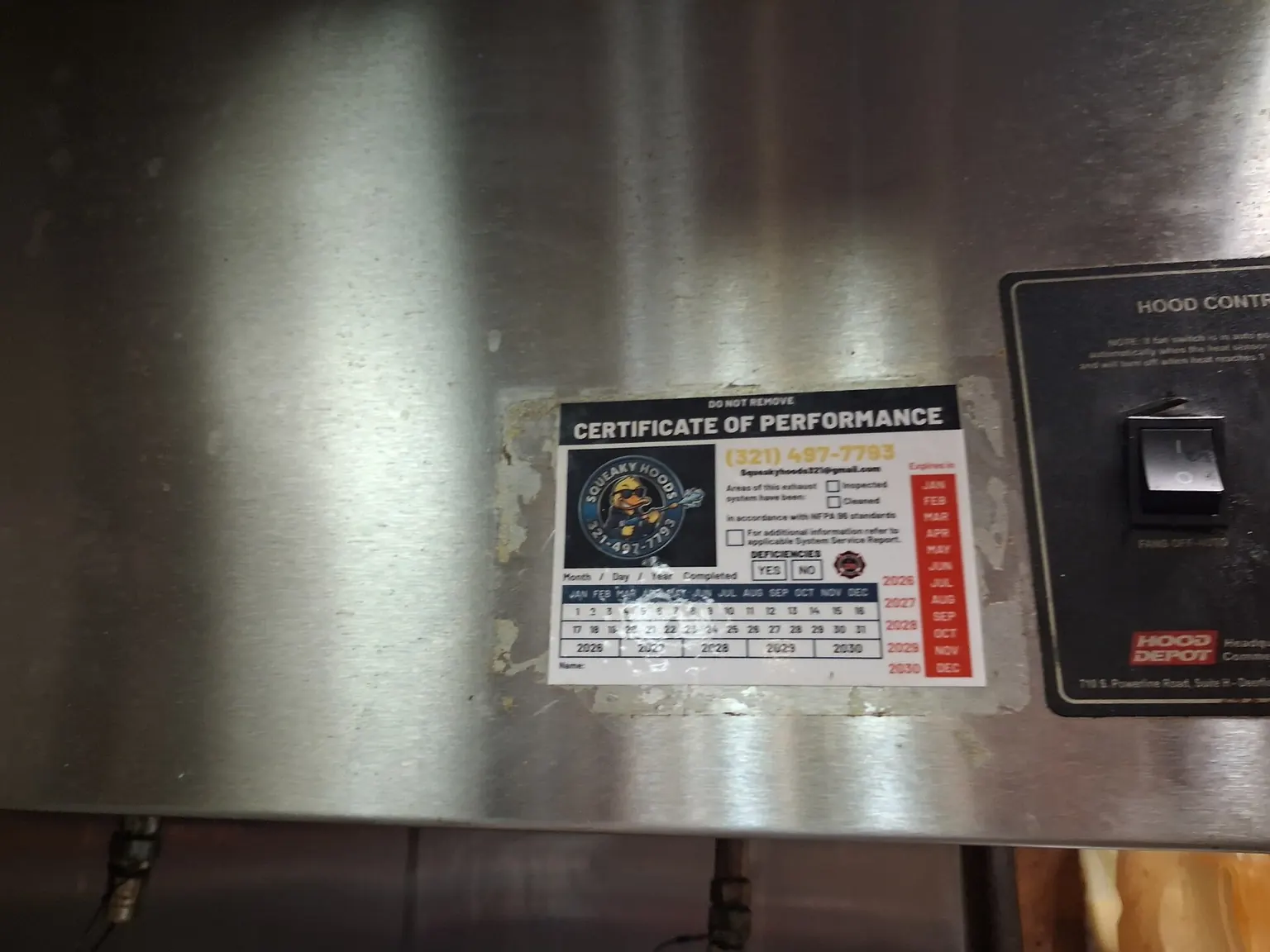
Bare metal where there was grease, filters back in place, and the sheeting and the washwater gone with us. The certificate goes on the hood before we leave, dated, so whoever asks to see it can see it without ringing anyone.
You also get the photographs — the hood, and the inside of the ductwork. On a deep clean there is a written report with them, including anything we could not reach and why. We would rather write that down than have an inspector find it.
Service comes first
This work happens around your service, not through it — usually after close or overnight, on a line that has had time to go cold. A kitchen that ran late can push a start, and we would rather move an hour than rush a system half-clean. If a date matters to you, say so when you ask for the quote and we’ll be straight about whether it’s realistic.
If something isn’t right
If the work doesn’t come out the way you understood it would, tell us — while we’re still in the kitchen if you can, or as soon as you notice. We’d far rather hear it from you than not hear it at all.
Questions about how we work? Email us at squeakyhoods321@gmail.com or use the contact page. For the full terms of using this site, see our Terms of Service and Privacy Policy.
Ready when you are
Ready to look at the system?
You know how a job runs now. Tell us where the kitchen is and what is over the line, and we’ll put a number on yours.